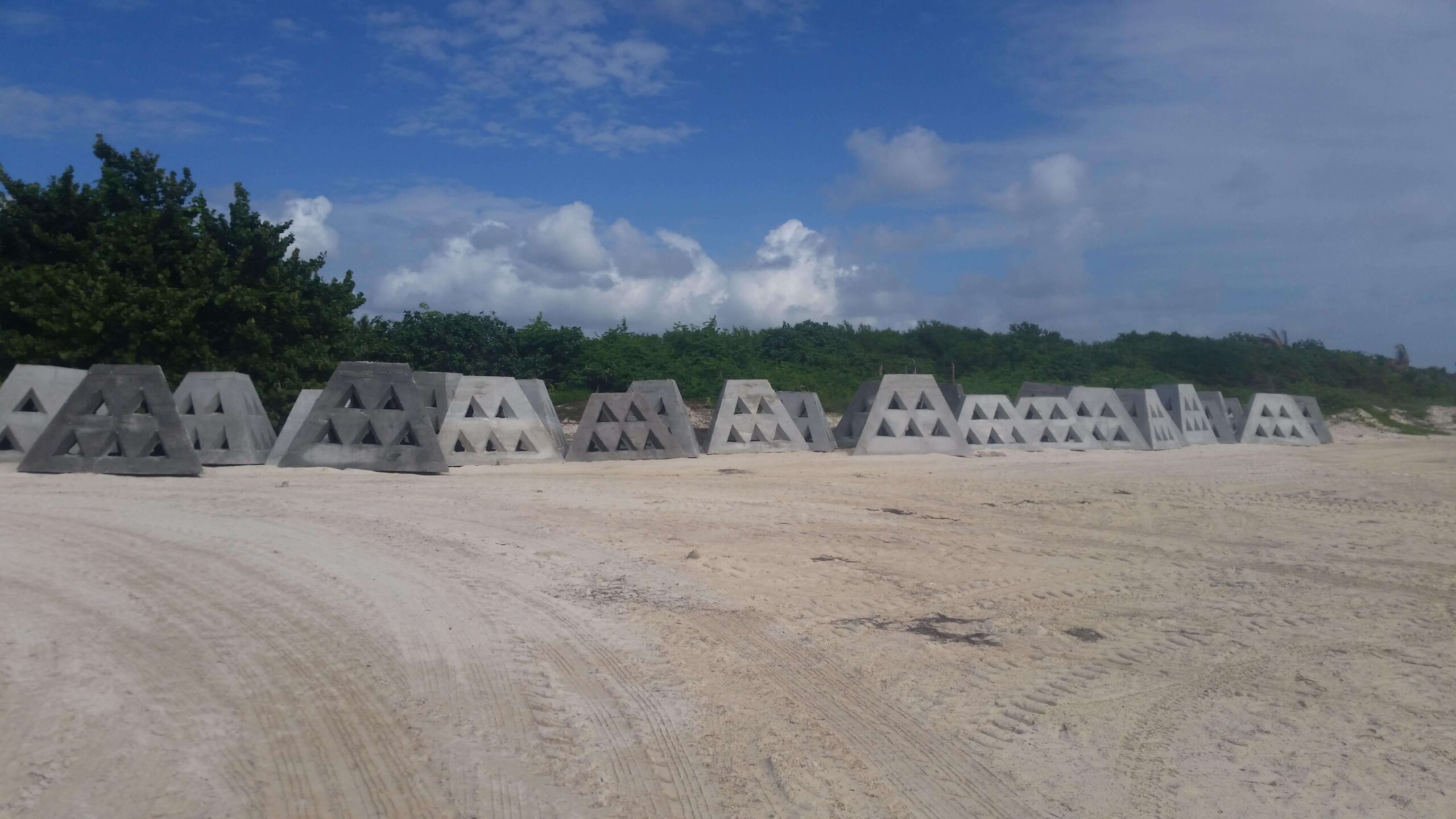


Adaptive Marine Architecture
AmA® stands for Adaptive Marine Architecture.
From Passive Marine Structures to Intelligent Offshore Assets
Offshore infrastructure currently depends on separate systems for scour protection, structural monitoring, environmental compliance, security sensing and subsea inspection.
These systems are often supplied by different contractors, installed independently and monitored through disconnected platforms.
AmA® ElectroReef® integrates these functions within one modular subsea architecture.
Each node can be configured to protect the seabed, support marine habitat, host mission-specific sensors, collect persistent data and connect with authorised offshore, security or asset-management systems.
The result is a more resilient, connected and adaptable approach to offshore infrastructure.
It is a modular engineering approach in which the physical structure, sensor payload, power supply, communications package and digital interface can be adapted to the asset, mission and marine environment.
The architecture can be configured for:
offshore wind foundations;
floating-wind anchors;
subsea power and communication cables;
pipelines;
offshore substations;
ports and harbour approaches;
naval and strategic infrastructure;
critical seabed corridors;
environmental monitoring;
future offshore hydrogen applications.
AmA® ElectroReef is not one fixed product. It is a scalable platform built around a standardised structural core and mission-configurable technology modules.
One Platform. Five Core Functions.
Protect
The marine-grade modular structure can provide physical protection around offshore foundations, cables, pipelines and other seabed assets.
Potential applications include:
scour reduction;
seabed stabilisation;
cable protection;
foundation protection;
anchor and mooring integration;
physical protection of critical subsea assets.
Structural performance is engineered for each site based on metocean, geotechnical and operational conditions.
Secure
Mission-configurable sensing networks can support persistent awareness around critical offshore and undersea assets.
Potential security applications include early warning of:
tampering;
anchor drag;
cable exposure;
seabed disturbance;
unauthorised divers;
remotely operated vehicles;
unmanned underwater systems;
unusual acoustic activity;
anomalous magnetic signatures;
suspicious intervention near protected infrastructure.
Multiple nodes may form a distributed sensing perimeter or protected corridor.
Enable
The powered, connected architecture creates a foundation for future applications, including:
smart floating-wind anchors;
distributed offshore sensing networks;
monitoring-as-a-service;
digital offshore operations;
environmental compliance platforms;
critical-infrastructure resilience;
future offshore green-hydrogen integration.


Defence and Maritime Security
Persistent Subsea Awareness for Critical Maritime Assets
AmA® ElectroReef can be configured as a persistent, distributed sensing and protection platform for defence, national security and critical-undersea-infrastructure applications.
The same subsea structure that protects physical infrastructure can also host acoustic, optical, magnetic, structural and environmental sensors.
Potential deployment areas include:
naval bases;
military ports;
harbour approaches;
restricted anchorages;
subsea communication cables;
offshore energy assets;
pipelines;
offshore substations;
strategic seabed corridors;
temporary operating areas;
offshore logistics points.
Potential Users
Potential adopters include:
defence ministries;
navies;
coast guards;
NATO agencies;
military port authorities;
national-security organisations;
maritime intelligence agencies;
maritime police;
civil-protection authorities;
port operators;
transmission-system operators;
subsea cable owners;
offshore energy developers;
pipeline operators;
critical-infrastructure agencies.
AmA® ElectroReef
Intelligent Subsea Infrastructure for Offshore Energy, Critical Asset Protection and Maritime Security
AmA® ElectroReef® transforms passive subsea structures into intelligent, connected and nature-inclusive offshore infrastructure.
The platform combines marine-grade structural protection, embedded sensors, low-voltage power, secure communications and real-time data analytics within a modular Adaptive Marine Architecture.
Designed for offshore wind farms, subsea cables, pipelines, ports, naval facilities, offshore substations and strategic maritime infrastructure, AmA® ElectroReef® supports physical protection, persistent monitoring, maritime awareness and future offshore-energy applications.
Protect. Monitor. Secure. Connect. Enable.

Monitor
Protected sensor modules can provide continuous structural and environmental information.
Potential parameters include:
scour and seabed movement;
vibration and strain;
anchor and mooring loads;
cable condition;
corrosion and biofouling;
currents and sediment transport;
temperature and salinity;
turbidity;
dissolved oxygen and pH;
underwater noise;
environmental and biodiversity indicators.
Potential applications include:
scour reduction;
seabed stabilisation;
cable protection;
foundation protection;
anchor and mooring integration;
physical protection of critical subsea assets.
Structural performance is engineered for each site based on metocean, geotechnical and operational conditions.
Connect
AmA® ElectroReef® is designed to transmit data through deployment-specific communication systems.
Possible options include:
fibre-optic links;
cabled subsea communications;
acoustic modems;
offshore-platform gateways;
surface gateways;
secure radio or satellite links from surface nodes.
Data may be integrated with:
operator dashboards;
digital twins;
predictive-maintenance systems;
environmental reporting platforms;
maritime-security systems;
authorised command-and-control environments.
Access to third-party networks remains subject to technical feasibility, cybersecurity requirements and contractual approval.
Persistent Intelligence from the Seabed
Traditional subsea monitoring often relies on periodic vessel inspections, remotely operated vehicles and isolated sensors.
AmA® ElectroReef® is designed to provide persistent local monitoring directly from the seabed.
Each unit may contain a mission-specific combination of:
hydrophones;
passive acoustic arrays;
optical or low-light cameras;
magnetic sensors;
vibration and strain sensors;
pressure sensors;
current meters;
turbidity sensors;
temperature and salinity instruments;
dissolved oxygen and pH sensors;
structural-condition sensors;
cable-monitoring sensors.
Not every deployment requires every sensor.
The final payload is selected according to the asset, operating environment, security requirement and monitoring objective.
Edge processing and multi-sensor fusion may support:
anomaly detection;
event correlation;
signature recognition;
localisation support;
alert prioritisation;
structural-condition assessment;
environmental trend analysis;
predictive-maintenance decisions.
Detection range, classification accuracy, communications reliability and false-alarm rates must be validated for each deployment.
Potential Direct Military Uses
Possible military and security applications include:
naval-base perimeter monitoring;
harbour and port-approach surveillance;
protection of subsea military communications;
detection of unauthorised underwater intervention;
monitoring temporary anchorages;
surveillance around offshore logistics locations;
protection of strategic energy infrastructure;
persistent monitoring of sensitive seabed areas;
support for maritime-domain awareness.
AmA® ElectroReef® is intended to complement, not replace:
naval patrol vessels;
sonar networks;
autonomous underwater systems;
remotely operated vehicles;
maritime-surveillance aircraft;
satellite monitoring;
port-security systems.
Its role is to provide an additional persistent sensing layer directly on the seabed.

Dual-Use Value
The same platform can support both civilian and defence functions.
A single installation may combine:
- physical asset protection;
- structural monitoring;
- environmental monitoring;
- security sensing;
- seabed situational awareness;
- maintenance data;
- recurring analytics.
This dual-use model can reduce duplication, improve asset utilisation and enable shared investment between governments, infrastructure owners and offshore operators.


Offshore Wind
Smarter Infrastructure for Fixed and Floating Wind
AmA® ElectroReef® is being developed for both fixed-bottom and floating offshore wind.
Fixed-Bottom Applications
- monopile and jacket-foundation protection;
- offshore-substation monitoring;
- cable-crossing protection;
- scour-sensitive areas;
- structural monitoring;
- environmental sensing;
- security awareness;
- retrofit and repowering projects.
Floating-Wind Applications
- nature-inclusive anchors;
- anchor-condition monitoring;
- mooring-load sensing;
- dynamic seabed monitoring;
- cable-condition monitoring;
- distributed environmental data;
- security monitoring;
- predictive-maintenance support.
The objective is to integrate protection, monitoring, security and ecological functionality from the earliest design stage.
Nature-Inclusive Design
Infrastructure Designed to Support Marine Life
Nature-inclusive design is incorporated into the physical architecture of AmA® ElectroReef®.
The structure may include:
- varied textures;
- cavities;
- sheltered spaces;
- species-supporting geometry;
- different exposure zones;
- modular habitat features;
- marine-compatible material formulations.
The objective is to support habitat development and ecological connectivity while fulfilling a technical offshore function.
Environmental benefits remain subject to site-specific baseline studies, monitoring and validation.
Nature-inclusive design is not treated as a decorative add-on. It is integrated with structural, monitoring and operational requirements.


Cybersecurity and Secure Data
Defence and critical-infrastructure configurations are intended to include:
- encrypted communications;
- authenticated devices;
- secure firmware;
- role-based access;
- network segmentation;
- local data buffering;
- tamper detection;
- event logging;
- customer-controlled data hosting;
- resilient operation during communication loss;
- secure integration with authorised systems.
The final cybersecurity architecture will be defined with end users and validated against the requirements of each deployment.
No cybersecurity certification should be assumed until formally obtained.

Critical Undersea Infrastructure
Protection for Cables, Pipelines and Strategic Seabed Assets
Subsea cables, pipelines and energy links are essential to modern economies and national security.
AmA® ElectroReef® can be deployed around critical infrastructure to support:
- physical protection;
- cable exposure monitoring;
- anchor-drag detection;
- seabed-change detection;
- tamper awareness;
- structural monitoring;
- environmental monitoring;
- persistent local data collection.
Distributed nodes may form a protected corridor along sensitive cable or pipeline sections.
The system is designed to provide earlier awareness of abnormal conditions and support faster operational response.
Future Offshore Green Hydrogen
AmA® ElectroReef® is also being developed as a potential platform for future offshore green-hydrogen applications.
The long-term concept is to connect offshore renewable electricity with subsea infrastructure capable of supporting:
- power distribution;
- environmental monitoring;
- safety sensing;
- structural integration;
- hydrogen-system condition monitoring;
- secure data transmission;
- nature-inclusive offshore deployment.
The hydrogen pathway remains subject to:
- electrochemical validation;
- materials testing;
- seawater compatibility studies;
- gas-management engineering;
- safety analysis;
- certification;
- offshore demonstration;
- industrial partnerships.
The near-term business does not depend on commercial hydrogen deployment.
Hydrogen represents future strategic optionality built upon the same powered, connected subsea architecture.